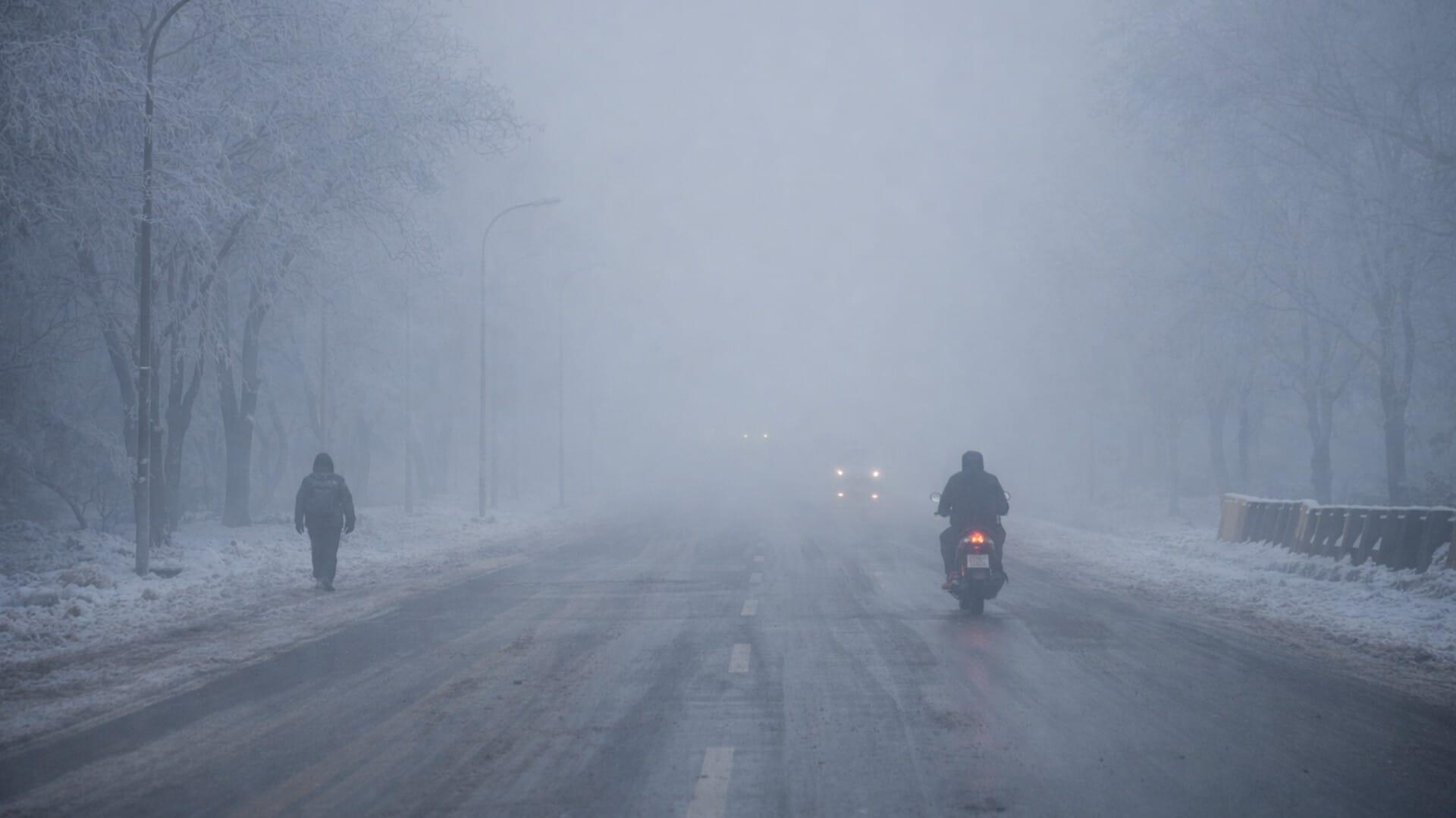
A severe cold wave combined with dense fog has intensified its grip over large parts of North and East India, prompting the India Meteorological Department (IMD) to issue fresh alerts that will remain in effect until December 31. The harsh weather is expected to disrupt daily life, transport, and pose health risks across several states.
According to the IMD’s latest bulletin, conditions are unlikely to change significantly over the next few days. The weather office has forecast persistent dense to very dense fog during night and morning hours, severely affecting visibility.
Widespread Impact Across States
The regions most affected by the cold wave, severe cold day conditions, and fog include Uttar Pradesh, Bihar, Delhi, Punjab, Haryana, and Rajasthan. The alert also extends to Jharkhand and parts of Northeast India, including Assam, Meghalaya, Nagaland, Manipur, Mizoram, and Tripura.
The IMD has specifically warned of ‘cold day’ to ‘severe cold day’ conditions in East Uttar Pradesh, with similar conditions likely in isolated areas of Bihar, Uttarakhand, West Uttar Pradesh, and Sub-Himalayan West Bengal.
Temperature and Fog Advisory
Minimum temperatures across Northwest, Central, and East India are expected to remain largely unchanged for the next four to five days, after which a gradual rise of 2-3 degrees Celsius is anticipated. The rest of the country is not expected to see any significant temperature changes.
Dense to very dense fog is predicted over Punjab, Haryana, Chandigarh, Delhi, and Uttar Pradesh. Isolated pockets of dense fog are also likely over Bihar, Himachal Pradesh, Uttarakhand, Odisha, and the northeastern states. Authorities have cautioned that reduced visibility could severely impact road, rail, and air transport.
Weather Systems Fuelling the Chill
The IMD’s analysis attributes the current conditions to a Western Disturbance in the middle tropospheric westerlies. A fresh western disturbance is expected to affect the Western Himalayan region from December 30. Furthermore, a strong subtropical westerly jet stream continues to influence Northeast India, sustaining the cold conditions.
Contrasting Weather in South and West India
While the north shivers, South India is experiencing different weather patterns. The IMD has forecast isolated to scattered rainfall over the Western Himalayan region, Tamil Nadu, Kerala, Karnataka, and the Andaman and Nicobar Islands. Thunderstorms with lightning and gusty winds of 30-40 kmph are likely over the Andaman and Nicobar Islands.
Strong surface winds of 45-55 kmph, gusting to 65 kmph, are expected over the Gulf of Mannar and adjoining Comorin areas. Fishermen along the Tamil Nadu coast have been advised to exercise caution. In contrast, weather across West India, including Gujarat, Maharashtra, and Goa, is expected to remain stable with no major warnings issued.
Health and Travel Caution
The prolonged spell of cold and fog poses significant risks. The IMD has warned of potential disruptions at airports and delays in highway and railway services. Health advisories have been issued, highlighting an increased risk of respiratory issues and other cold-related illnesses, particularly for children, the elderly, and those with pre-existing health conditions. Citizens are advised to limit outdoor exposure during early morning and night and to take precautions while driving.