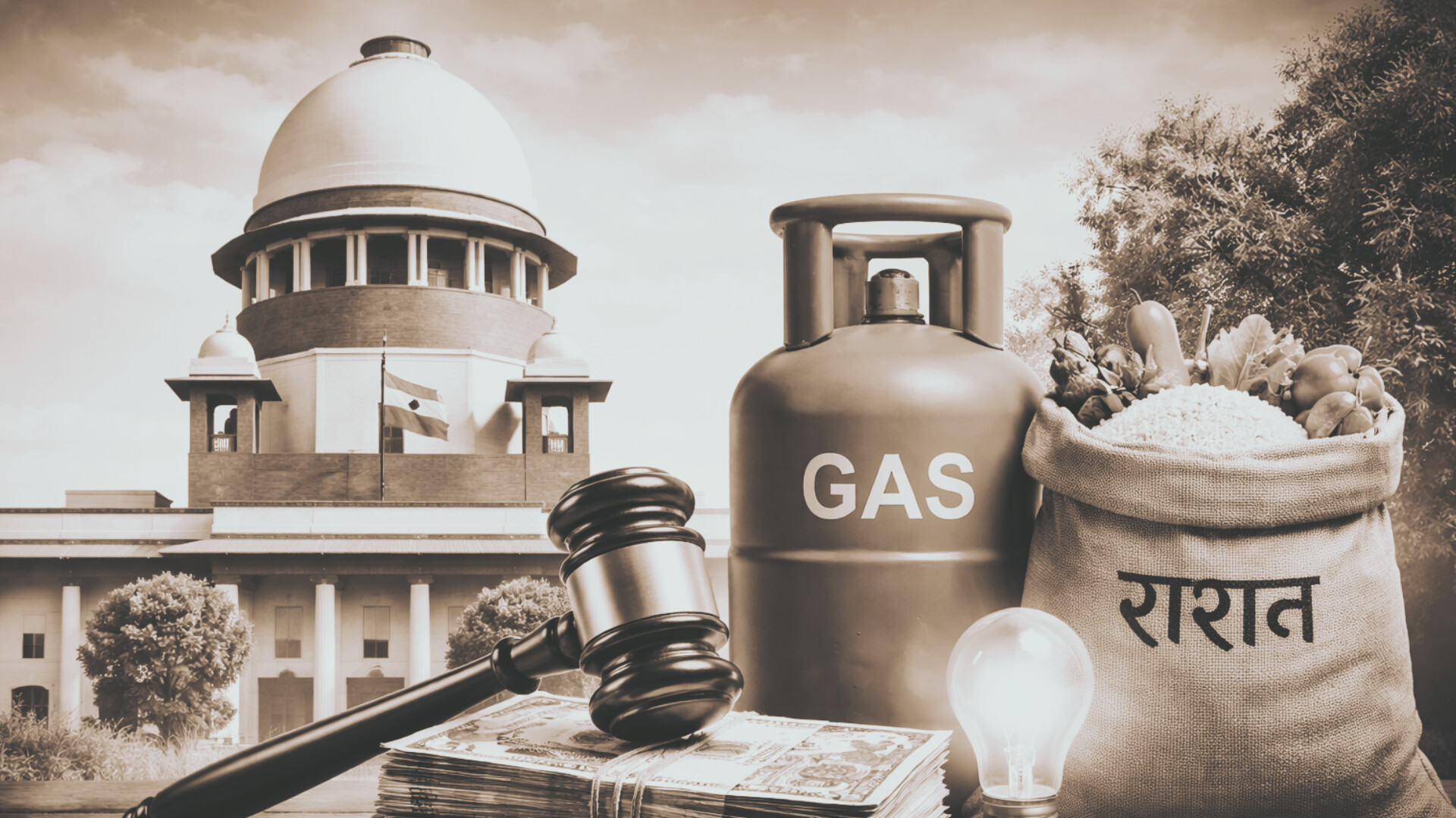
New Delhi: The Supreme Court of India on Tuesday expressed serious concern over the growing trend of states announcing free schemes and direct cash transfers, particularly ahead of elections. A bench headed by Chief Justice Surya Kant orally observed that this “freebie culture” is detrimental to the country’s long-term economic health and is becoming a form of appeasement.
The court questioned the rationale behind providing universal benefits without distinguishing between the needy and those who can afford the services. The observations came during a hearing on a plea by the Tamil Nadu Power Distribution Company Limited challenging a provision in the Electricity Amendment Rules 2024.
Undermining Work Culture
During the hearing, CJI Surya Kant questioned the impact of such policies on the nation’s work ethic. The bench, which also included Justices Joymalya Bagchi and Vipul Pancholi, suggested that providing free amenities across the board could discourage people from seeking employment.
“If people get free electricity, gas, food, and money directly in their accounts, why will they work?” — Chief Justice Surya Kant
The court clarified that while it is the state’s duty to support the underprivileged, extending these benefits to the capable and affluent sections of society indicates a serious policy flaw. According to the bench, such a “blanket freebie” approach negatively affects the overall work culture.
Questioning State Finances
The Chief Justice noted a nationwide pattern where new populist schemes are announced as elections draw near. He raised critical questions about the source of funding for these schemes, especially when many states are already running on a deficit.
“Where is this money coming from?” the CJI asked, suggesting that these funds could be better utilised for essential public infrastructure. “Should this money not be spent on roads, hospitals, schools, and other development works?”
A Call for Reconsideration
The bench strongly suggested that all political parties and policymakers must seriously reconsider this model of governance. The CJI emphasised that states should focus on creating employment opportunities, enabling citizens to lead lives of dignity and self-reliance.
The court warned that if state funds continue to be distributed for electoral gains, the country’s holistic development will inevitably suffer. Continuous distribution of freebies, the bench observed, is a matter of grave concern for nation-building as it distances people from work.