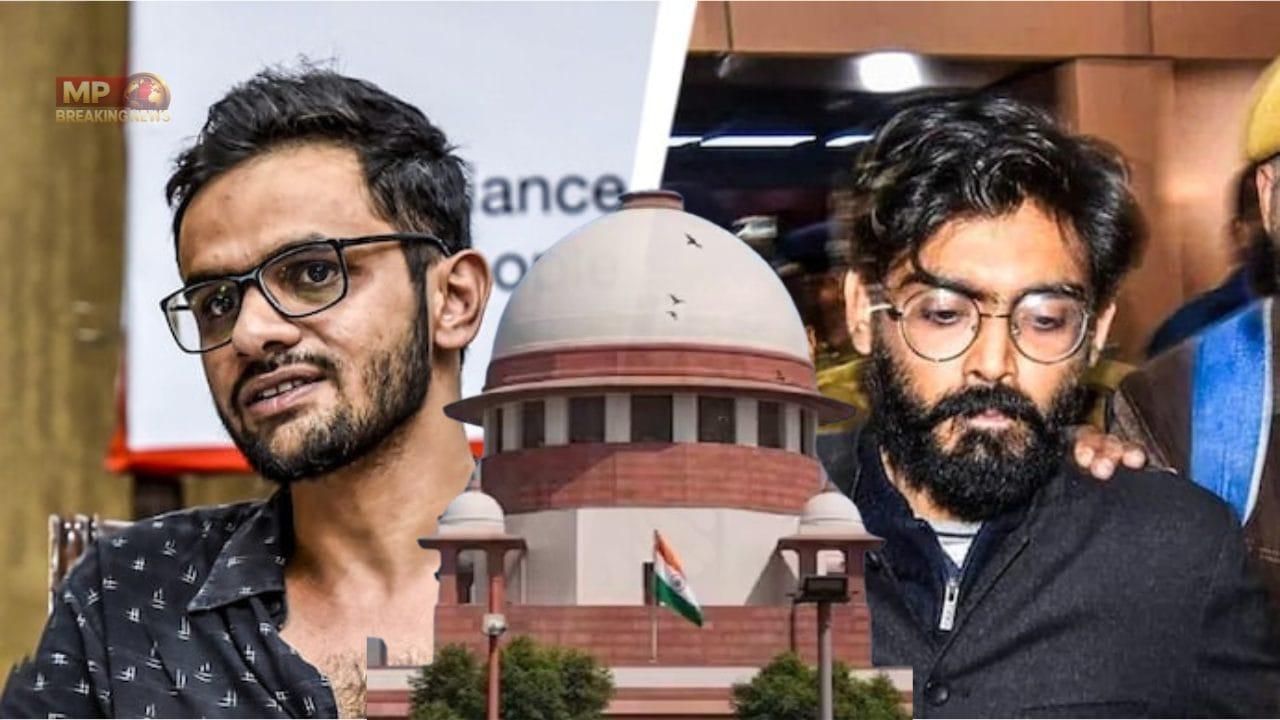
The Supreme Court on Monday declined to grant bail to former Jawaharlal Nehru University (JNU) student Umar Khalid and activist Sharjeel Imam in connection with the alleged ‘larger conspiracy’ behind the 2020 Delhi riots. The apex court observed that the prosecution’s material indicated a prima facie case against them, which attracts the statutory bar on bail under the stringent Unlawful Activities (Prevention) Act (UAPA).
While Khalid and Imam remain incarcerated, the top court provided relief to five other accused in the same case. The bench granted bail to Gulfisha Fatima, Meeran Haider, Shifa Ur Rehman, Mohd. Saleem Khan, and Shadab Ahmad, subject to strict conditions imposed by the trial court.
Distinction in Roles
A bench comprising Justices Aravind Kumar and N.V. Anjaria emphasized that not all accused in the conspiracy case stand on equal footing regarding their alleged culpability. The judges noted that the cases of Umar Khalid and Sharjeel Imam were on a ‘qualitatively different footing’ compared to the five individuals who were granted relief.
The court recorded its satisfaction that the statutory threshold required to deny bail under the UAPA was met in the specific instances of Khalid and Imam. Consequently, the current stage of proceedings did not justify their release.
Window for Future Relief
Despite the rejection, the Supreme Court kept a legal window open for the two activists. The bench clarified that Khalid and Imam could approach the court for bail again under specific circumstances. They may file fresh pleas after the examination of protected witnesses concludes or upon the completion of one year from the date of this order, whichever occurs earlier.
Conditions for Co-Accused
regarding the five accused who secured bail, the court clarified that this relief does not dilute the gravity of the allegations against them. The trial court has been empowered to cancel their bail immediately if any prescribed conditions are violated. The bench also observed that prolonged incarceration and significant delays in trial proceedings could warrant closer judicial scrutiny, even for serious offences booked under the UAPA.
Background of the Case
The case stems from the communal violence that erupted in northeast Delhi in February 2020, which resulted in 53 deaths and left hundreds injured. The Special Cell of the Delhi Police booked the accused under various provisions of the UAPA and the Indian Penal Code, alleging they orchestrated a ‘larger conspiracy’ to incite violence.
Umar Khalid has been in custody since September 13, 2020. Sharjeel Imam was arrested earlier on January 28, 2020, and faces multiple cases across different states, though he has secured bail in matters unrelated to this specific conspiracy case.
The Supreme Court’s verdict came while hearing appeals challenging a September 2 order of the Delhi High Court. The High Court had previously refused bail, citing prima facie material that suggested a coordinated plan behind the riots.
Reacting to the development, Umar Khalid’s father, S.Q.R. Ilyas, offered a brief response.
“The judgment speaks for itself.” — S.Q.R. Ilyas