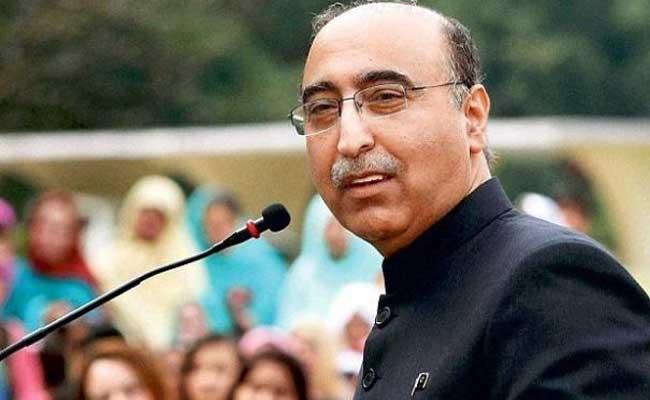
New Delhi: In a highly provocative statement, former Pakistan High Commissioner to India Abdul Basit said Pakistan could use nuclear weapons against Indian cities if it were attacked by the United States or Israel. The former diplomat described India as a “default target” for retaliation in such a scenario.
Basit made the remarks during a live television discussion on regional security and potential military conflicts involving Western powers. He argued that if Pakistan found itself unable to strike distant adversaries directly, it should not hesitate to turn its focus towards India.
India as a Retaliatory Option
During the debate, Basit explicitly named Mumbai and New Delhi as potential targets. When asked about Pakistan’s possible routes for retaliation against a Western military intervention, he identified India as the most viable option.
“What route do you think will be good for us? India.” — Abdul Basit
He elaborated that even if Pakistan’s direct attackers were out of its military range, the option to strike Indian cities should always be maintained. He stressed that this response would include its nuclear arsenal, underscoring that Pakistan should not relinquish this capability.
#BREAKING: Pakistan’s most radical Islamist Diplomat Abdul Basit threatens United States amid West Asia crisis. Basit former Pak High Commissioner to India says if US attacks Pakistan, Rawalpindi’s Asim Munir will attack Mumbai & New Delhi if Pak missiles don’t reach Middle East. pic.twitter.com/j4OxSg0ZnY
— Aditya Raj Kaul (@AdityaRajKaul) March 22, 2026
Diplomatic Past and Implications
Abdul Basit served as Pakistan’s chief diplomat in New Delhi from 2014 to 2017, a period marked by significant bilateral tensions. His latest comments have drawn sharp criticism and concern, particularly his reference to Mumbai.
The mention of the city is a sensitive point in India’s security history, directly referencing the 2008 Mumbai terror attacks, which were carried out by Pakistan-based terrorists. Basit’s statement, made in a hypothetical context, has been viewed as inflammatory rhetoric.
A video clip of his remarks from the broadcast has circulated widely on social media platforms, reigniting discussions on the volatile nature of regional security dynamics. The comments highlight the persistent threat perception and strategic calculations in the subcontinent.