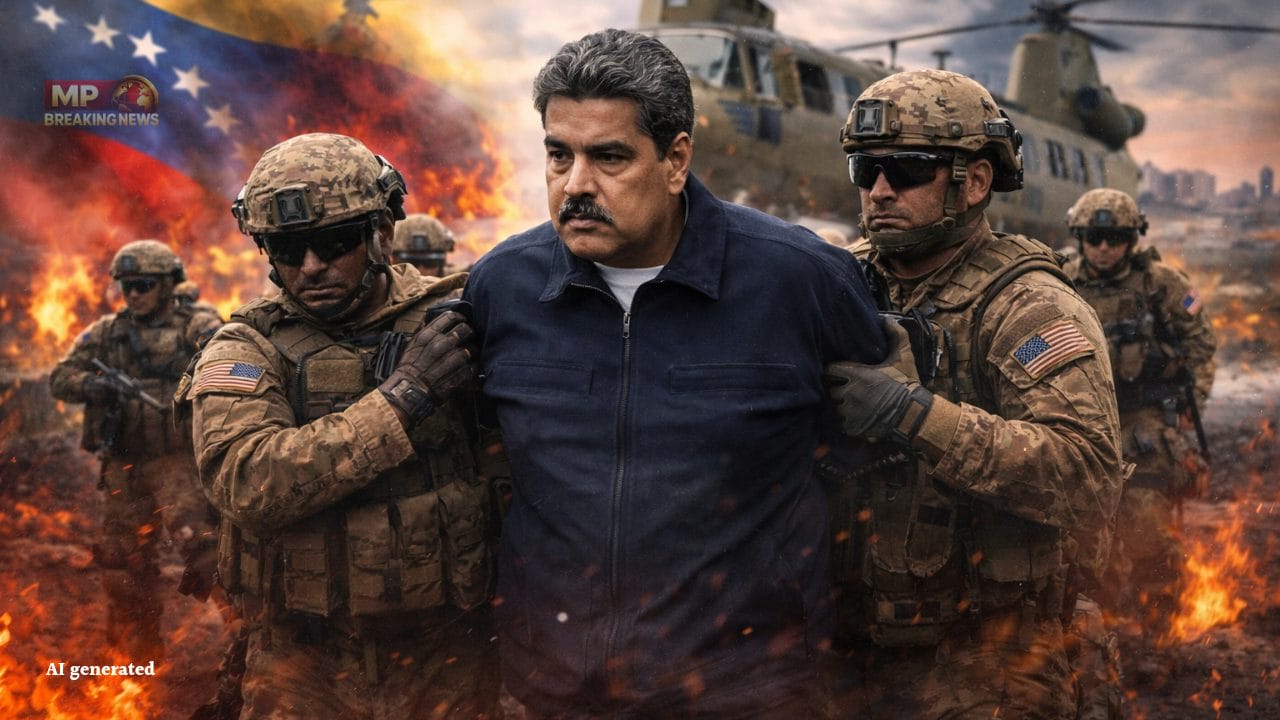
In a stunning geopolitical development marking the start of 2026, the United States military has detained Venezuelan President Nicolas Maduro following a surprise operation in the capital city of Caracas. The early morning raid, described by Washington as a “limited military operation,” has plunged the South American nation into uncertainty and triggered a fierce global diplomatic backlash.
Residents in Caracas reported hearing loud explosions and witnessing military movements in the pre-dawn hours. Several neighborhoods experienced power outages as the operation unfolded. Shortly after the initial chaos, US officials confirmed that American forces had executed a targeted mission to take President Maduro into custody.
Operation based on criminal charges
The US administration clarified that the detention was not a declaration of war but an enforcement action based on pre-existing criminal indictments filed in American courts. According to official statements, Maduro was secured by US military personnel and immediately transported out of Venezuela under heavy guard.
Washington has long been at odds with the Maduro regime, frequently accusing his administration of corruption, electoral fraud, and involvement in international drug trafficking networks. While previous years saw the imposition of severe economic sanctions and diplomatic isolation, US officials stated that this military step was the necessary culmination of legal processes after political solutions failed.
Caracas alleges sovereignty violation
The reaction from within Venezuela was immediate and sharp. Government representatives in Caracas denounced the operation as a direct assault on national sovereignty and a coup attempt driven by foreign interests. Officials characterized the move as a strategy to seize control of the nation’s vast oil reserves and impose political will through force.
Security agencies in Venezuela remain on high alert, with tensions running high across the country. The government has rejected all US accusations, maintaining that the charges against Maduro are politically motivated fabrications designed to destabilize the region.
Global powers react sharply
The operation has polarized the international community. Major global powers including Russia, China, Cuba, and Iran issued strong condemnations, labeling the detention a violation of international law. These nations warned that such unilateral military actions set a dangerous precedent for global stability.
Regional neighbors in Latin America expressed deep concern over the potential for unrest spilling across borders. Conversely, some Western nations and opposition political groups viewed the development as a potential opening for democratic transition in Venezuela. The United Nations and other international bodies have appealed for calm, urging all parties to prioritize dialogue and avoid further violence.
Historical precedents of US intervention
This incident recalls previous instances where the US has used military force against foreign leaders. In 1989, US forces invaded Panama to arrest President Manuel Noriega on drug trafficking charges. Similarly, the 1983 intervention in Grenada and the 2003 invasion of Iraq, which toppled Saddam Hussein, were justified by Washington on security and legal grounds, though they faced significant criticism regarding sovereignty.
As Venezuela faces an uncertain future, the US has indicated it does not intend to impose permanent rule but may play a role in a transitional arrangement. Observers fear that the power vacuum could lead to internal strife, protests, and deeper economic hardship. The detention of a sitting head of state has ignited a fresh global debate on the limits of military intervention and the sanctity of national sovereignty.